BetPeek by Oddin.gg: What Happens When Esports Bettors Control the Camera
Published: 27.03.2026

Barry Sheelan
Content Marketing Manager

TL;DR
Esports betting breaks when bettors can’t see the context behind odds changes. BetPeek by Oddin.gg fixes this by enabling camera control and interactive viewing inside the sportsbook, keeping live betting and match understanding in one place.
The moment betting breaks
There’s a point in almost every esports match where the betting experience falls apart.
A round swings. A team fight resolves off-screen. The odds shift, but the reasoning isn’t necessarily obvious from the broadcast. Within seconds, the bettor opens another tab to find the context the broadcast missed.
For operators, this is more than just a UX inconvenience. Once a bettor leaves your environment to understand the match, you’re no longer in control of what happens next. They’re one click from a competitor’s odds, and you’re competing to bring them back.
BetPeek, built by Oddin.gg, is designed to close that gap. It replaces the observer-locked stream with an interactive viewing layer that gives bettors control over how they watch a match. It supports Counter-Strike 2 and Dota 2, integrates through iFrame or API, and works alongside your existing streams and markets.
Why does the standard stream fail esports bettors?
Roughly 85% of all esports bets are placed live. Everything hinges on what a bettor can see and understand in real time.
In football or tennis, the broadcast generally gives you the full picture. But in CS2 and Dota 2, it doesn’t. Key moments happen outside the camera view; decisions are shaped by positioning, timing, abilities, and information the observer never sees.
The broadcast was built for entertainment audiences, but bettors need something different. Without it, they leave.
Every time that happens, the connection between viewing and betting weakens, the window for the next bet narrows, and the risk of that bettor not coming back increases.
What is BetPeek and how does it change the viewing experience?
Most attempts to fix this problem improve what already exists: better streams, lower latency, cleaner integrations. Those help, but the bettor is still locked to a single observer-driven perspective.
BetPeek removes that constraint.
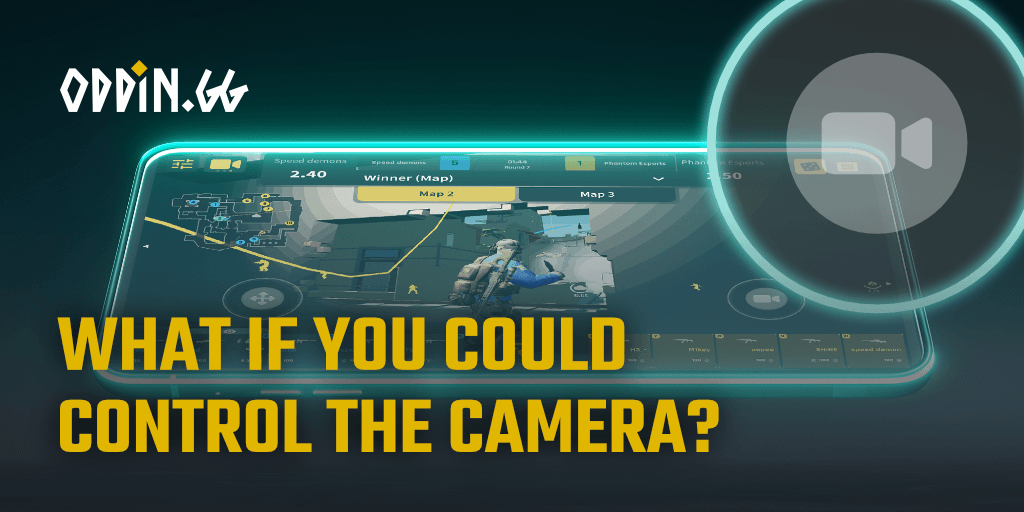
Within your sportsbook, bettors can move through the match themselves. Follow specific players; switch views; revisit key moments; access deeper in-game context. The experience shifts from watching to exploring.
Integration is also lightweight. It works through Oddin.gg’s iFrame or API, sits inside your existing architecture, and runs on the same official data that powers Oddin.gg odds, without replacing anything already in place.
What can bettors do with BetPeek during a CS2 match?
CS2 outcomes are often decided by information that isn’t visible in a broadcast. Rotations, positioning, and timing all shape how a round unfolds, but a single camera angle rarely captures the full picture.
When a bettor can’t see why a round played out the way it did, confidence in the next bet drops.
BetPeek gives them that missing context.
They can follow any player’s POV in real time instead of relying on the observer camera. Activate X-ray mode to see positions through walls. Switch to a bird’s-eye map view to track rotations. Rewind key moments without losing their place in the live action.
All of it happens inside your sportsbook, with Oddin.gg’s contextual betting overlay alongside the stream.
How does BetPeek work for Dota 2?
Dota 2 is a different challenge. It’s not just about hidden information; it’s about volume.
Ten heroes, constant ability usage, item progressions, and team fights that span the map. There’s more happening at once than any broadcast can show, and bettors who know the game feel that gap constantly.
BetPeek opens that up.
Bettors can easily follow any hero in real time, jump anywhere on the map through minimap navigation, rewind team fights, and check abilities, items, and stats mid-match. Full scoreboards and game graphs add another layer of context, while spell visualization and sound effects bring the experience closer to the game client.
For experienced bettors, the value is specific: track item progression, review how a fight unfolded, and check net worth before placing a live bet.
That’s the context they’re already looking for, and BetPeek puts it where the betting happens.
What engagement results has BetPeek delivered so far?
The CS2 data answers the most practical question: do bettors actually use this?
According to live tournament data from our partners, one in five active bettors with access to BetPeek chose to use it. Those bettors already had a standard stream available and opted for something that gave them more control over their experience.
Those who used BetPeek spent an average of around seven minutes in the interactive viewer, with interaction levels two to three times higher than standard streams.
Bettors stay longer, and they interact more as watching and betting start working as one experience instead of two. That’s what matters.
How does BetPeek help with retention and differentiation?
Most sportsbooks compete on similar foundations in esports. Same matches. Similar markets. Comparable pricing. Standing out in ways a bettor immediately notices is difficult.
BetPeek is noticeable.
No public streaming platform offers bettor-controlled POVs, X-ray, replay on demand, or interactive map navigation during a live match. If a bettor gets used to that experience on your platform, it doesn’t exist elsewhere unless they also have BetPeek.
For experienced esports bettors, the difference registers quickly. More control leads to more confidence, longer sessions, and a stronger reason to stay.
Early feedback reflects that. Bettors highlight the ability to switch perspectives, check angles, and move through the match without delay. That doesn’t come from incremental improvements; it comes from a fundamentally different way of watching.
How difficult is it to integrate BetPeek?
BetPeek works through Oddin.gg’s iFrame or API, runs on the same data feed that powers Oddin.gg odds and markets, and operates alongside your current setup.
No rebuild and no separate data pipeline.
If you already integrate Oddin.gg esports data, BetPeek extends what’s in place. If you don’t, the integration is still straightforward.
Full CS2 and Dota 2 support is live now, with expanded visualization tools, UI enhancements, and multiview options on the roadmap.
What should you do next?
If bettors are leaving your platform mid-match to understand what’s happening, you already know the problem.
BetPeek is built to solve it.
It’s live for CS2 and Dota 2. See it running on real matches.
FAQs
Why do esports bettors leave sportsbook platforms during live matches?
Most esports broadcasts are built for entertainment audiences, not bettors. When the stream doesn’t provide enough tactical context for an in-play decision, bettors leave to find it on platforms like Twitch or YouTube. With roughly 85% of esports bets placed live, every time a bettor switches tabs to understand what's happening, the connection between viewing and betting weakens and the risk of them not returning increases.
How can sportsbooks increase engagement with esports bettors?
The biggest lever is giving bettors more control over how they watch a match. Standard streams lock viewers to a single observer-driven camera angle, which limits the tactical information available for in-play betting. Interactive viewing tools that let bettors follow specific players, revisit key moments, and access in-game data within the sportsbook keep the viewing and betting experience in one place, which leads to longer sessions and higher interaction rates.
What makes esports betting different from traditional sports betting?
Esports titles like CS2 and Dota 2 are layered and fast-moving, with key information often happening outside the main camera view. Bettors in this space tend to be deeply familiar with the games they follow and make decisions based on granular in-game details. The combination of high live betting volume, complex in-game dynamics, and a digitally native audience means operators need engagement tools built specifically for how esports bettors consume content, not repurposed versions of what works for traditional sports.
How do interactive esports streams improve live betting?
Interactive streams give bettors the ability to navigate a match on their own terms rather than relying on a single broadcast perspective. Features like player POV selection, replay on demand, and real-time map navigation provide the tactical context bettors need to make confident in-play decisions without leaving the sportsbook. Early data from interactive viewing tools in esports shows two to three times higher interaction rates compared to standard streams, with measurably longer session times.
YOU MIGHT BE INTERESTED